Huiju Opera
Introduction
Huiju Opera, also known as Hui Opera, is a traditional Chinese opera originating from Anhui province. It is one of the regional genres of opera that has contributed significantly to the rich tapestry of Chinese performing arts.
The repertoire of Huiju Opera is diverse, featuring over 50 plays, including renowned titles such as "Flooding Seven Armies", "Drunken Beauty", "Sorrow of the Sword", "Story of the White Snake" and "Story of the Liu Ming Chuan". Several of these works have earned prestigious accolades, underscoring the artistic and cultural significance of Huiju Opera in the broader context of Chinese performing arts.
Throughout its history, Huiju Opera has experienced both periods of decline and resurgence. However, its rich heritage and distinctive artistic features have ensured its continued vitality and appeal. The hard work and dedication of generations of artists since the 1950s have infused this time-honored tradition with a youthful vigor, enabling it to thrive in contemporary times.
Characteristics
The defining characteristics of Huiju Opera are rooted in its musical elements, costumes and makeup and performance style. These elements collectively contribute to the unique identity and enduring popularity of this traditional art form.
Musical Elements
The musical elements of Huiju Opera are integral to its narrative and emotional expression. The music comprises a variety of tunes and instruments that are characteristic of the Anhui region. The melodies are often rich and evocative, providing a dynamic accompaniment to the onstage drama. Instrumentation typically includes traditional Chinese instruments such as the erhu and pipa, which add depth and texture to the performances.
One of the key aspects of Huiju Opera's musicality is its vocal performance, which requires singers to master a range of techniques and styles. The vocal delivery in Huiju Opera is both expressive and technically demanding, with performers using a combination of singing and spoken dialogue to convey the story and emotions. This blend of vocal techniques is a hallmark of Chinese opera, and in Huiju, it is executed with particular finesse and artistry.
Costumes and Makeup
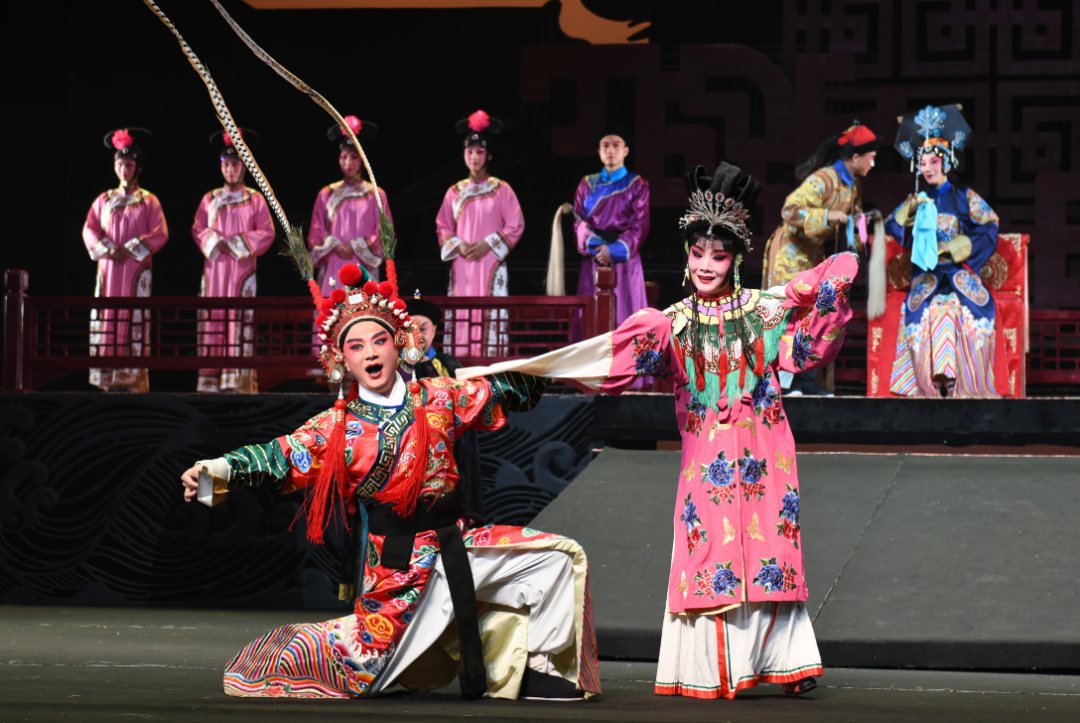
Costumes and makeup in Huiju Opera are vibrant and elaborate, reflecting the historical and cultural context of the stories being told. The costumes are often crafted from luxurious fabrics and adorned with intricate embroidery, showcasing the craftsmanship and attention to detail that defines traditional Chinese opera attire. Each costume is carefully designed to reflect the character's status, personality, and role within the narrative, with different colors and patterns signifying various traits and allegiances.
Makeup in Huiju Opera is equally significant, with performers applying stylized facial designs to enhance their expressions and convey character traits. The makeup is not merely decorative; it serves as a visual language that communicates important information to the audience. Bold colors and exaggerated features are employed to symbolize emotions and attributes, with different designs indicating traits such as bravery, cunning or villainy.
Performance Style
Huiju Opera's performance style is marked by its elaborate staging, physicality and dramatic storytelling. The performances are characterized by a blend of singing, acting and martial arts, with each element seamlessly integrated to create a cohesive and captivating spectacle. The performers are skilled in a variety of techniques, from graceful movements to acrobatic feats, which are used to heighten the drama and engage the audience.
The narrative structure of Huiju Opera is often complex, featuring intricate plots and multifaceted characters. The stories draw from a rich tapestry of historical events, folklore and classical literature, providing a window into China's cultural heritage. The performers bring these stories to life with their dynamic portrayals, using a combination of speech, song and physical expression to convey the depth and nuance of the characters.
Preservation and Revival Efforts
The preservation and revival of Huiju Opera have been the focus of significant efforts by the Huiju Opera Troupe of Anhui province and other cultural institutions. These efforts are driven by a commitment to safeguarding this important cultural heritage and ensuring its continued relevance in the modern world.
One of the key strategies for preserving Huiju Opera is the documentation and archiving of its rich repertoire. The troupe has meticulously collected and cataloged nearly 1,000 plays, along with a vast array of tunes, music and facial make-up designs. This comprehensive archive serves as a valuable resource for researchers, educators, and practitioners, enabling them to study and draw inspiration from the wealth of material available.
In addition to archiving, efforts have been made to pass down the skills and knowledge associated with Huiju Opera to new generations of performers. The troupe has trained nearly 100 professional opera performers, ensuring that the artistry and techniques of Huiju Opera are preserved and perpetuated.
Revival efforts have also involved the staging and promotion of traditional repertoires, as well as the creation of new works that reflect contemporary sensibilities. The modern Hui Opera work "The Hui Troupe", for example, was staged at the Anhui Grand Theater, vividly depicting a group of folk artists striving to promote and perfect the art in the Qing Dynasty (1644-1911).
International tours and cultural exchanges have further contributed to the revival of Huiju Opera, exposing it to diverse audiences and fostering cross-cultural appreciation. The troupe's performances in regions such as Japan and Spain, which have introduced Huiju Opera to global audiences and enhanced its international profile.








